Report
The Paintbrush Factory closed in 2022, not 2019. A correction, and what actually happened
We published the wrong year in this site's timeline. We checked it, fixed it, and read the closing statement — which is harsher than anything we would have written.
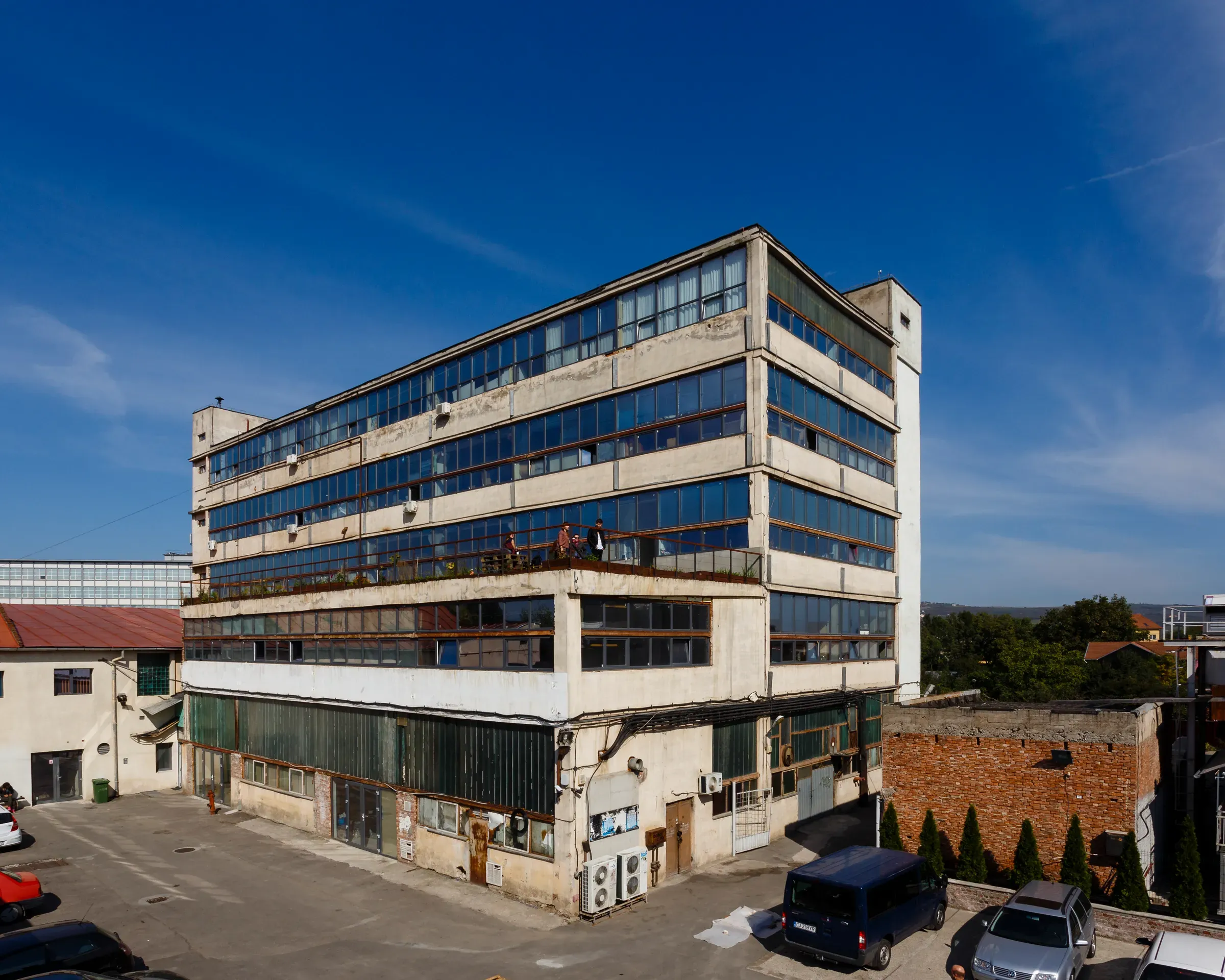
The timeline on this site's story page said the Paintbrush Factory wound up in 2019, “after ten years”. That is wrong. It closed in March 2022, after thirteen.
We are publishing the correction as an article rather than editing it away quietly, because a site that puts “verified” badges on its records has exactly one serious obligation: to say when it got something wrong.
Where the error came from
The timeline was documented from two foreign sources — a gallery portrait published by Gallery Weekend Berlin, and a piece on art in Cluj from Contemporary Art Issue. Both are reasonable for the founding of Plan B and for the Venice pavilions. Neither is a primary source on the end of a cultural federation in Mărăști.
The rule we apply from now on for Romanian institutional dates: a Romanian source quoting the organisation's own statement beats a foreign gallery profile, however well written.
What it was, in numbers
Founded in 2009 in a former paintbrush factory in the Mărăști district, as the first collective project on that scale in Romanian cultural life. More than fifty artists, gallerists and cultural managers.
Two thousand square metres. Twenty-nine contemporary art spaces: studios, galleries, exhibition rooms and performance halls.
Across thirteen years: hundreds of cultural projects and over two thousand events — exhibitions, theatre, contemporary dance, debates, workshops, screenings, concerts.
What the closing statement says
The announcement came on 7 March 2022, in a statement the Factory's team published on Facebook. It is not a polite farewell.
“The closure of the factory is a failure. It is our collective failure, the failure of the Factory's community to keep a living network alive beyond the physical space we shared, and it is also the failure of local and national authorities, who cannot identify a communal cultural asset or support, over the long term, the people who produce it.”
The statement goes on to describe how the independent sector actually runs: “The operating model of these organisations still rests on badly paid work and a great deal of self-exploitation.”
The building was to return to being an industrial space.
Why this matters for a guide
We measured it: “fabrica de pensule cluj” draws 390 searches a month in Romania, and “fabrica de pensule” another 260. That is four and a half years after it closed.
For comparison: the three busiest galleries operating in Cluj today — Aluvial, Atelier Patru and Galeria Parter — draw, between them, zero.
A place shut since 2022 is looked up almost seven hundred times a month; three open spaces with weekly programmes are not looked up at all. That is why the Factory has a page here as history rather than as a destination — and why the year on that page had to be right.
The search and review figures in this piece were measured on 10 September 2026. They may have changed since.
What this is about
- Școala de la Cluj →
A term coined in another country, for a generation that never called itself that.
- Fabrica de Pensule →
An independent cultural centre in a former paintbrush factory, opened in 2009 and closed for good in March 2022. Two thousand square metres, twenty-nine art spaces.
- Galeria Plan B →
Founded in 2005 by Mihai Pop and Adrian Ghenie. Has had a permanent Berlin space since 2008. The bridge between the Cluj scene and the international market.