Guide
Romania's first open-air museum is in Cluj, and it is almost a hundred years old
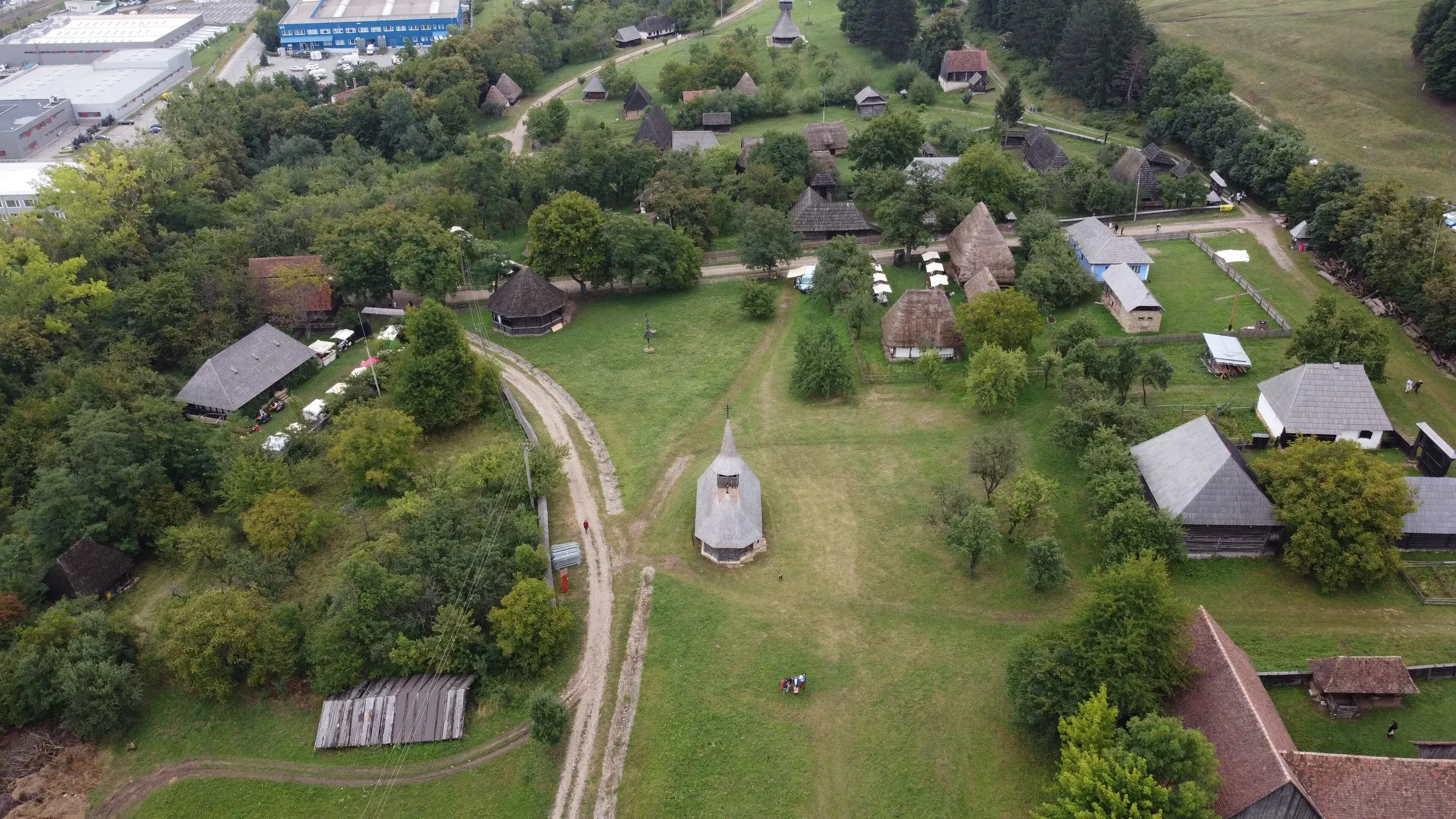
The “Romulus Vuia” Ethnographic Park opened on 1 June 1929. In 1930 it received a sheepfold from Poiana Sibiului — together with the shepherd and seventy-five sheep.
Seven hundred and twenty people a month search for “parcul etnografic romulus vuia”. That is more than any gallery in this guide draws, and nearly twice the most-searched independent space in the city.
It is also Romania's first open-air museum. Not the second, not one of. The first.
1929
Founded on 1 June 1929 as a section of the Ethnographic Museum of Transylvania, by decision of the Ministry of Cults and Arts. Recognised in law, published in the Official Gazette on 5 April 1932.
Its founder, the ethnographer Romulus Vuia, chose an arrangement worth reading twice: some of the original rural homesteads were to be lived in by peasants engaged in traditional economic activity. Not a museum of objects in cases — a working village.
Initial area: seventy-five hectares.
What was brought in, and how
Between 1929 and 1940: the house from Vidra (1929). A sheepfold from Poiana Sibiului in 1930 — transferred together with the shepherd and seventy-five sheep. The wayside cross from Lupșa (1931). The homestead from Telciu (1932), donated by the villagers. The Hungarian barn from Stana (1936).
A museum restaurant opened too, the Gaudeamus, serving visitors traditional food.
Today the park holds around two hundred objects and structures.
The museum that took refuge
After north-west Transylvania was ceded under the Vienna Diktat on 30 August 1940, the Ethnographic Park took refuge in Sibiu, where it operated until 1945.
An open-air museum that moves in its entirety because of a border. It is the kind of detail that says more about the twentieth century in Transylvania than a page of textbook.
In 1956 the thematic plan was restructured by Teodor Onișor and Valer Butură into four sectors: technical installations and craft workshops; regional homestead types and monuments of folk architecture; the ethno-botanical sector; and the ethno-zootechnical sector.
One moved house, and five siblings
The homestead from Mărișel was installed in the park in 1975. Four members of the Crișan family took apart the house their paternal grandfather had built and raised it again in Cluj, in the Hoia woods.
Fifty years after that, five of the Crișan siblings — born and raised in that house — met on its porch, in the park.
If you wonder why it is worth taking a child to an open-air museum, that is the answer: the objects here still have people who remember how they are used.
Practical
Strada Tăietura Turcului, no number, in Hoia. Open Wednesday to Sunday, 10:00–18:00. Closed Monday and Tuesday.
The Ethnographic Museum of Transylvania has two sites on the same hours: the Ethnographic Park, and the indoor section in the Reduta Palace at Memorandumului 21, in the centre. They are two different visits — one outdoors, one inside a building.
Those 10:00–18:00 hours run longer than the Art Museum, which closes at 17:00. For a day out with children the park has the obvious advantage: you walk, you run, and nobody has to whisper.
What this is about
- Parcul Etnografic Romulus Vuia →
The open-air section of the Ethnographic Museum — vernacular architecture moved and rebuilt.
- Muzeul Etnografic al Transilvaniei →
The richest collection of traditional craft in the region — and the natural starting point for any conversation about the Romanian blouse, pottery or weaving.